How Generative AI Tools Are Transforming AEC Project Planning
Sep 18, 2026
Category: BIM / Digitization / Automation
SEO TSA
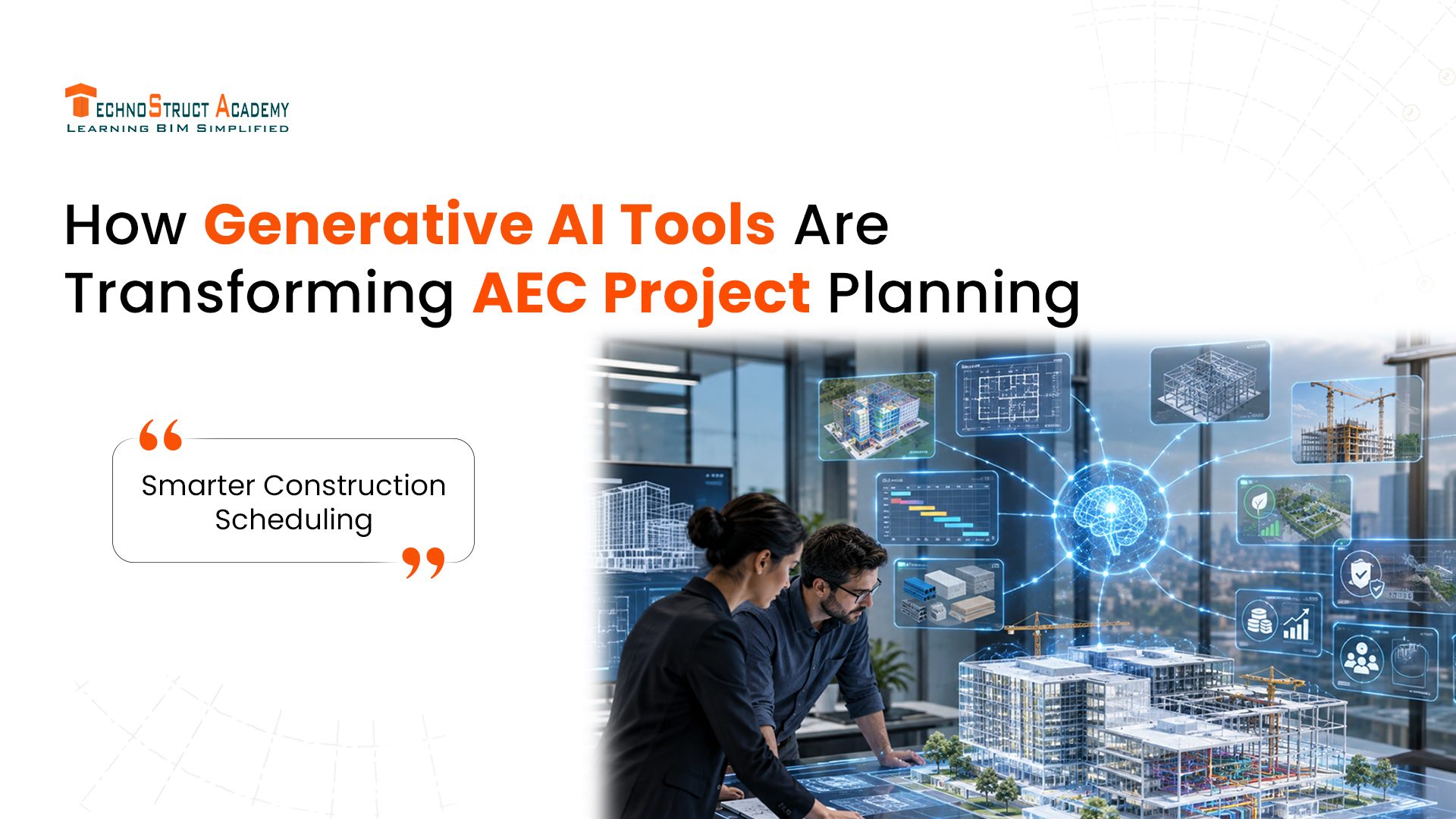
Planning an Architecture, Engineering, and Construction (AEC) project is rarely straightforward. A project may start with a simple concept, but as work progresses, hundreds of decisions have to be made about design, materials, cost, resources, timelines, and coordination.
A small change in the design can affect the structural model. A delay in material delivery can affect the construction schedule. Even a minor coordination issue between architectural and MEP teams can lead to costly rework.
This is where Generative AI is starting to make a difference in AEC project planning.
Instead of replacing architects, engineers, BIM professionals, and project managers, generative AI tools are helping them explore options, process information, and handle repetitive planning tasks more efficiently.
Let’s look at how this technology is changing the way AEC projects are planned.
What Is Generative AI in AEC?
Generative AI refers to technology that can create new content or solutions based on the information and instructions provided to it.
In AEC, this can include generating design alternatives, analyzing project information, assisting with schedules, summarizing documents, and helping professionals explore different project scenarios.
For example, an architect could provide information about a site’s dimensions, required floor area, building orientation, and other design requirements. A generative design system can then help explore different layout possibilities.
The important point is that the professional remains in control. AI provides options and insights, while the final technical decision is made by the project team.
1. Faster Design Exploration
Developing different design options can take considerable time. Architects usually have to balance aesthetics with practical requirements such as space, daylight, circulation, structural limitations, and energy performance.
Generative AI can help speed up the early design stage by producing multiple alternatives based on defined parameters.
For example, if an architect is working on a commercial building, AI-assisted tools can help explore different arrangements for floor plates, building massing, and space allocation.
Instead of spending hours developing every option from scratch, the architect can review several possibilities and develop the most suitable one further.
2. Smarter Construction Scheduling
Construction schedules contain numerous activities and dependencies. If one activity gets delayed, several activities that follow it may also be affected.
Generative AI can help project teams analyze these relationships and explore alternative sequences.
Consider a situation where a critical material is expected to arrive late. Rather than simply waiting for the delivery, the team can evaluate whether other activities can be brought forward.
This type of what-if planning can help project managers understand the possible impact of changes before making decisions.
3. Better BIM Workflows
BIM has already changed how project information is created and coordinated. Generative AI is adding another layer to these workflows.
A BIM model contains a large amount of information about building elements, materials, quantities, spaces, equipment, and systems. Finding and reviewing this information manually can sometimes be time-consuming.
AI-assisted tools can make it easier to interact with project information.
For example, a BIM professional could ask:
“Which elements on Level 3 are missing required parameters?”
Or:
“Show the MEP equipment associated with this area.”
Instead of manually searching through different parts of the model, professionals can use AI-assisted workflows to find relevant information more quickly.
4. Early Risk Identification
Every construction project has risks. These can include design changes, procurement problems, labour shortages, coordination issues, and schedule delays.
Generative AI can analyze available project information and highlight patterns that may require attention.
For example, if a particular activity has a history of delays or depends on several approvals, the project team can identify it as an area that deserves closer monitoring.
This does not mean AI can predict every problem. Construction sites are affected by real-world conditions that may not be available in project data. However, AI can provide another layer of analysis for project teams.
5. Support for Cost and Quantity Planning
Cost planning is another area where AI-assisted workflows can be useful.
BIM models can contain information about quantities of concrete, flooring, doors, windows, structural elements, and MEP components. Extracting and organizing this information manually can take time, particularly on large projects.
AI can help professionals process this information and compare different project scenarios.
For example, a team could examine how changing a material or design element might affect quantities and, consequently, project costs.
The final estimate still needs to be checked by quantity surveyors, estimators, engineers, or other qualified professionals, but AI can reduce some of the repetitive work involved in analysis.
6. Improved Coordination Between Teams
AEC projects involve multiple disciplines working together. Architects, structural engineers, MEP engineers, contractors, and BIM teams all depend on each other’s information.
A change made by one team can create problems elsewhere.
Generative AI, when connected with BIM and other project data, can help identify relationships and areas that require review.
For instance, if an architectural change affects an MEP zone, an AI-assisted system could help draw attention to the related information so the coordination team can investigate it.
This can support better communication and reduce the chances of important changes being overlooked.
What Are the Challenges?
Generative AI is not a magic solution for AEC projects.
The quality of the output depends heavily on the quality of the data being used. If project information is incomplete or incorrect, AI-generated results may also be unreliable.
There are also concerns around data security, confidentiality, technical accuracy, and accountability.
Most importantly, AI-generated suggestions should not be accepted without professional review. A construction project involves safety, regulations, contracts, and significant financial decisions.
AI can assist the professional, but it should not replace professional responsibility.
Skills AEC Professionals Should Develop
As AI becomes more common in AEC workflows, professionals may benefit from developing skills beyond traditional software knowledge.
Some valuable areas include:
- BIM and information management
- Data handling and analysis
- Generative AI fundamentals
- AI-assisted automation
- Prompt writing
- Digital collaboration
- Critical thinking and technical verification
For BIM professionals in particular, understanding how AI works with BIM data can open new opportunities in project coordination and digital construction.
The Future of AEC Project Planning
Generative AI is gradually moving AEC planning from a purely manual process toward a more data-driven approach.
In the future, we may see closer integration between BIM, AI, cloud collaboration, digital twins, scheduling, and cost management.
The biggest change may not be that AI designs or manages an entire project by itself. Instead, professionals may have better tools to compare options, identify issues, process information, and make decisions.
For architects, engineers, BIM professionals, and construction managers, learning how to work alongside these technologies could become an important part of staying relevant in a rapidly changing industry.
Final Thoughts
Generative AI is changing AEC project planning by making it easier to explore alternatives, analyze project information, support BIM workflows, and evaluate different scenarios.
However, technology alone cannot deliver a successful project. Good data, strong technical knowledge, effective communication, and professional judgment will continue to matter.
The real opportunity lies in combining human expertise with intelligent digital tools to make AEC projects more efficient, coordinated, and informed.

Blog Categories