Difference Between Digital Twin and BIM
Apr 06, 2026
Category: Uncategorized
SEO TSA
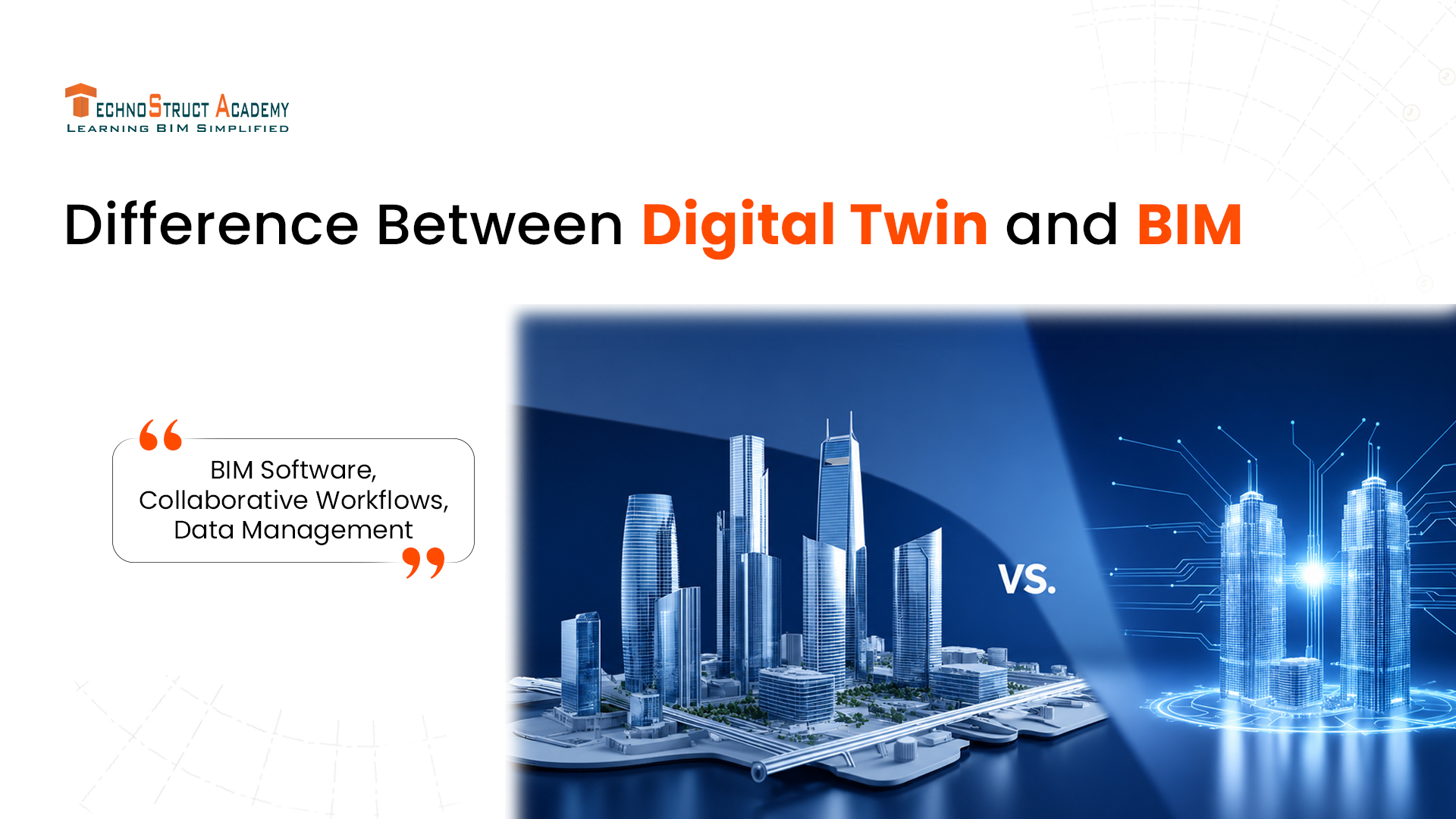
If you’re in construction, architecture, or engineering, you’ve probably come across the terms BIM and Digital Twin quite often. At first glance, they may sound similar, but they serve different purposes.
Understanding the difference between Digital Twin and BIM is important if you want to stay relevant in today’s rapidly evolving construction industry.
Let’s break it down in a simple and practical way.
What is BIM?
Building Information Modeling (BIM) is a process used to create and manage digital representations of buildings or infrastructure projects.
It is often described as a smart 3D model that includes detailed information such as design, structure, materials, and MEP systems. BIM allows different teams—architects, engineers, and contractors—to work together on a single coordinated model.
One of the biggest advantages of BIM is that it helps identify potential issues early through clash detection and improves overall coordination during the construction phase.
In simple terms, BIM helps you design and build projects more efficiently.
What is a Digital Twin?
A Digital Twin goes a step further than BIM. It is a live digital replica of a physical building or asset that continuously updates using real-time data.
This data comes from sensors, IoT devices, and other systems installed in the building. It can include information like temperature, energy usage, equipment performance, and more.
Unlike BIM, which is mainly used during design and construction, a Digital Twin is used after the building is completed to monitor and optimize its performance.
In simple terms, a Digital Twin helps you manage and maintain a building in real time.
Key Differences Between Digital Twin and BIM
The main difference lies in their purpose and timing.
BIM is primarily used during the design and construction stages of a project. It focuses on creating a detailed and accurate digital model that helps teams plan, coordinate, and execute the project efficiently.
A Digital Twin, on the other hand, is used after construction is complete. It connects the physical building with a digital model using real-time data, allowing continuous monitoring and analysis.
Another important difference is the type of data involved. BIM works with design and project data that is mostly static, while a Digital Twin relies on live, dynamic data coming from sensors and systems.
How BIM and Digital Twin Work Together
Rather than seeing them as competing technologies, it’s more useful to understand how they complement each other.
BIM serves as the foundation. It creates the digital model during the early stages of a project. Once the building is constructed, this model can evolve into a Digital Twin by integrating real-time data.
This means BIM supports the creation of the asset, while a Digital Twin supports its ongoing operation and performance.
Together, they cover the entire lifecycle of a building—from design to maintenance.
A Simple Real-Life Scenario
Consider a commercial building project.
During the design and construction phase, BIM is used to create detailed models, detect clashes between systems, and ensure smooth coordination between teams. This helps reduce errors, avoid rework, and save time.
Once the building is completed, a Digital Twin can be used to monitor its performance. It can track energy consumption, detect equipment issues, and even predict maintenance requirements.
This combination leads to better efficiency, lower operational costs, and improved building performance over time.
Why This Matters for Your Career
The construction industry is moving towards smarter, data-driven buildings. As a result, BIM has become a fundamental skill, and Digital Twin is emerging as the next step in this evolution.
If you already have a strong understanding of BIM, you are well-positioned to adapt to future technologies like Digital Twin. Professionals who understand both concepts are likely to have better career opportunities in the coming years.
Learn BIM the Right Way
If you’re planning to build a career in this field, it’s important to start with the right foundation.
Technostruct Academy focuses on practical BIM training that includes real-world workflows, hands-on project experience, and a strong emphasis on coordination and clash detection.
This kind of learning approach helps you understand not just BIM, but also how it connects to advanced concepts like Digital Twin.
Final Thoughts
The difference between Digital Twin and BIM becomes clear when you look at their roles.
BIM helps you design and construct buildings more efficiently, while a Digital Twin helps you manage and optimize them after completion.
Both technologies are important, and together they are shaping the future of construction.
If you want to stay ahead in your career, now is the right time to understand and learn both.
FAQs
Is Digital Twin the same as BIM?
No, BIM is used during design and construction, while Digital Twin is used for real-time monitoring after construction.
Does Digital Twin replace BIM?
No, Digital Twin builds on BIM. Both technologies work together.
Which is better: BIM or Digital Twin?
Both have different roles. BIM is essential for creating the project, and Digital Twin is important for managing it after completion.

Blog Categories