How BIM Reduces Construction Costs and Delays
Jul 15, 2026
Category: BIM / Digitization / Automation
SEO TSA
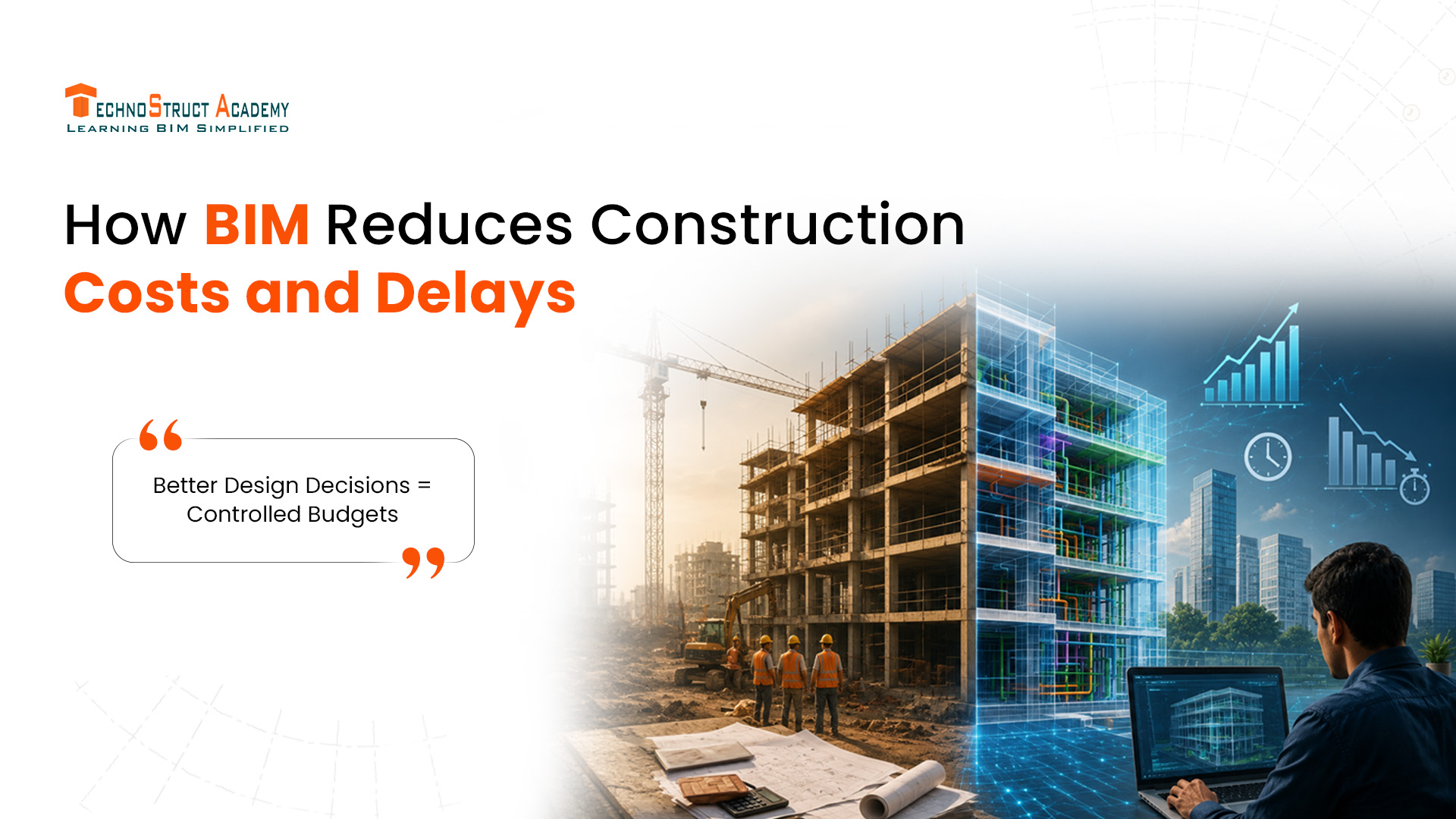
The construction industry has long struggled with budget overruns, project delays, design conflicts, and inefficient communication. According to industry reports, large construction projects often exceed their planned budgets by 20% and face significant schedule delays due to poor coordination and unexpected site issues.
This is where Building Information Modeling (BIM) has transformed project delivery. BIM is no longer just a 3D design tool—it is a collaborative digital process that enables architects, engineers, contractors, and owners to plan, design, construct, and manage projects more efficiently.
By integrating accurate project information into a centralized model, BIM minimizes errors, improves communication, and provides data-driven insights that help teams make better decisions.
In this blog, you’ll discover how BIM reduces construction costs and delays, the technologies behind its success, and why it has become an essential part of modern construction projects.
What is BIM?
Building Information Modeling (BIM) is a digital representation of a building’s physical and functional characteristics. Unlike traditional CAD drawings, BIM combines geometry, scheduling, quantities, material information, costs, and maintenance data into one intelligent model.
Every stakeholder works from the same data source, ensuring that everyone has access to accurate and up-to-date project information.
The result is better collaboration, fewer mistakes, and faster project delivery.
Why Construction Projects Go Over Budget
Before understanding BIM’s advantages, it’s important to recognize the common reasons projects become expensive.
Typical causes include:
- Design errors
- Rework due to coordination issues
- Material wastage
- Poor communication
- Inaccurate quantity estimation
- Schedule conflicts
- Site clashes
- Delayed decision-making
- Lack of project visibility
- Frequent design revisions
Traditional workflows often identify these problems only after construction begins, making corrections costly and time-consuming.
How BIM Reduces Construction Costs
1. Early Clash Detection Eliminates Costly Rework
One of BIM’s biggest advantages is automated clash detection.
Mechanical, electrical, plumbing, structural, and architectural models are coordinated before construction begins.
Instead of discovering conflicts on-site, BIM software identifies:
- Pipe vs Beam clashes
- HVAC duct conflicts
- Electrical tray intersections
- Ceiling coordination issues
- Structural interference
Resolving these issues during design is significantly cheaper than making changes during construction.
Benefits
- Less demolition
- Lower labor costs
- Reduced material waste
- Faster approvals
2. Accurate Quantity Takeoffs
BIM automatically generates precise quantities directly from the model.
This improves:
- Material estimation
- Procurement planning
- Inventory management
- Vendor coordination
Teams avoid over-ordering or under-ordering materials, reducing waste and controlling project costs.
3. Better Cost Estimation with 5D BIM
5D BIM integrates project costs with the digital model.
Every component contains pricing information, enabling:
- Real-time cost estimation
- Instant budget updates
- Cost comparison of design alternatives
- Financial forecasting
Whenever a design changes, project costs update automatically.
This helps owners make informed decisions before construction starts.
4. Reduced Material Waste
Construction waste represents a major project expense.
BIM helps reduce waste by:
- Accurate material calculations
- Better prefabrication planning
- Optimized cutting lists
- Efficient logistics
Less waste means lower disposal costs and improved sustainability.
5. Improved Procurement Planning
BIM provides detailed procurement schedules linked with construction activities.
Project managers can:
- Order materials on time
- Avoid storage costs
- Prevent supply shortages
- Reduce idle inventory
Efficient procurement lowers overall project expenses.
How BIM Reduces Construction Delays
1. 4D BIM Improves Project Scheduling
4D BIM links project schedules with the 3D model.
Teams can visualize construction progress before work begins.
Benefits include:
- Better sequencing
- Early schedule conflict detection
- Resource optimization
- Improved planning
This significantly reduces schedule delays.
2. Enhanced Team Collaboration
BIM creates a Common Data Environment (CDE) where every stakeholder accesses the same information.
Benefits include:
- Real-time updates
- Version control
- Faster approvals
- Improved communication
Everyone works from the latest model, reducing confusion and delays.
3. Faster Decision-Making
Project owners can visualize every design change before construction begins.
This enables quicker approvals and minimizes lengthy redesign cycles.
Teams spend less time reviewing drawings and more time executing the project.
4. Better Site Coordination
Construction managers use BIM models during execution to coordinate:
- Daily activities
- Equipment placement
- Crane movements
- Site logistics
- Safety planning
Improved coordination keeps projects on schedule.
5. Reduced RFIs (Requests for Information)
Incomplete drawings generate numerous RFIs during construction.
Since BIM contains comprehensive project information, teams have fewer questions during execution.
This reduces communication delays and speeds up project delivery.
Key BIM Technologies That Reduce Costs
Clash Detection
Automatically identifies design conflicts before construction begins.
4D BIM
Links schedules with project models for efficient planning.
5D BIM
Connects cost data with BIM models for accurate budgeting.
Common Data Environment (CDE)
Provides centralized project information for all stakeholders.
Digital Twin Integration
Supports predictive maintenance and lifecycle cost optimization after project completion.
Real-World Benefits of BIM
Organizations using BIM commonly report:
| Benefit | Business Impact |
|---|---|
| Better Collaboration | Fewer communication errors |
| Clash Detection | Less rework |
| Accurate Quantities | Lower material costs |
| Improved Scheduling | Reduced delays |
| Better Cost Control | Higher profitability |
| Enhanced Visualization | Faster approvals |
| Better Facility Management | Lower lifecycle costs |
Best Practices for Maximizing BIM Benefits
To fully leverage BIM, organizations should:
- Develop a BIM Execution Plan (BEP)
- Follow ISO 19650 standards
- Establish clear naming conventions
- Use a Common Data Environment (CDE)
- Conduct regular model coordination meetings
- Train project teams on BIM workflows
- Integrate 4D and 5D BIM into project planning
- Monitor model quality throughout the project lifecycle
Challenges in BIM Implementation
While BIM offers substantial advantages, successful implementation requires:
- Investment in software and hardware
- Skilled BIM professionals
- Standardized workflows
- Strong leadership support
- Continuous training
- Effective change management
Organizations that overcome these challenges often achieve significant long-term returns through improved efficiency and reduced project risks.
The Future of BIM in Construction
Emerging technologies are expanding BIM’s capabilities:
- Artificial Intelligence (AI) for predictive clash detection
- Machine Learning for project forecasting
- Digital Twins for real-time asset monitoring
- IoT integration for smart buildings
- Cloud-based collaboration platforms
- Generative Design for optimized layouts
- Automated quantity estimation
- Robotics integration for construction automation
As these innovations mature, BIM will continue to drive greater efficiency, reduce costs, and shorten project timelines.
Conclusion
Building Information Modeling has transformed how construction projects are planned, designed, and delivered. By improving coordination, enabling early clash detection, integrating scheduling and cost management, and fostering collaboration, BIM helps organizations reduce unnecessary expenses and avoid costly delays.
Whether you’re managing residential, commercial, or infrastructure projects, adopting BIM can lead to better budget control, improved productivity, and higher-quality outcomes. As digital construction practices continue to evolve, BIM will remain a cornerstone of efficient, data-driven project delivery.
Frequently Asked Questions (FAQs)
1. How does BIM reduce construction costs?
BIM reduces costs by minimizing rework through clash detection, improving quantity takeoffs, optimizing procurement, reducing material waste, and enabling accurate cost estimation with 5D BIM.
2. What is 4D BIM?
4D BIM integrates the project schedule with the 3D model, allowing teams to visualize construction sequences and identify scheduling conflicts before work begins.
3. What is 5D BIM?
5D BIM combines the BIM model with cost information, enabling real-time budgeting, cost forecasting, and financial analysis throughout the project lifecycle.
4. Can BIM help prevent project delays?
Yes. BIM improves planning, coordination, communication, and scheduling, helping teams identify and resolve issues early to keep projects on track.
5. Is BIM suitable for small construction projects?
Absolutely. While large projects often see the greatest benefits, small and medium-sized projects can also improve efficiency, reduce errors, and control costs by implementing BIM workflows.

Blog Categories