Can AI Replace BIM Coordinators? Myths vs Reality
Jul 29, 2026
Category: Uncategorized
SEO TSA
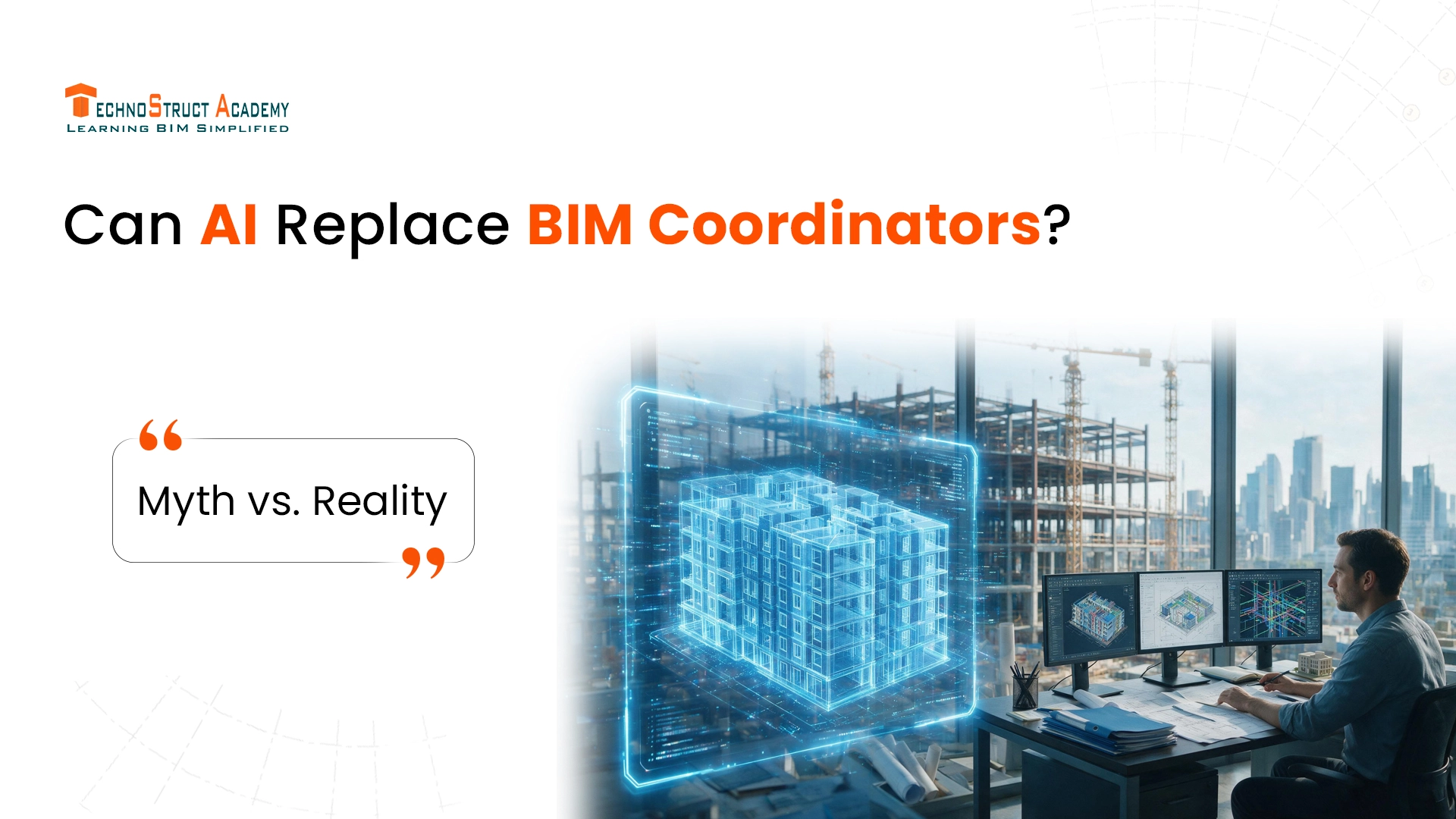
Artificial Intelligence (AI) is rapidly transforming the Architecture, Engineering, and Construction (AEC) industry. From automated clash detection and generative design to predictive analytics and project scheduling, AI is making Building Information Modeling (BIM) workflows faster and smarter.
As these technologies continue to evolve, one question keeps surfacing:
Can AI replace BIM Coordinators?
The short answer is no—but it will significantly transform their role.
AI excels at automating repetitive and data-intensive tasks, but BIM coordination requires engineering judgment, multidisciplinary collaboration, communication, and strategic decision-making—areas where human expertise remains indispensable.
In this article, we’ll separate myths from reality and explore how AI is reshaping the future of BIM coordination.
Who Is a BIM Coordinator?
A BIM Coordinator acts as the bridge between architects, structural engineers, MEP engineers, contractors, and project stakeholders.
Their responsibilities include:
- Coordinating multidisciplinary BIM models
- Performing clash detection
- Managing model quality
- Ensuring compliance with BIM standards
- Conducting coordination meetings
- Supporting BIM Execution Plans (BEP)
- Maintaining Common Data Environments (CDE)
- Reviewing constructability
- Communicating design changes
Although software assists with many of these tasks, successful coordination depends on human collaboration and technical expertise.
Why People Think AI Will Replace BIM Coordinators
The rise of AI-powered BIM tools has created the impression that many coordination tasks can now be fully automated.
Modern AI can:
- Detect clashes automatically
- Classify issues by discipline
- Prioritize conflicts
- Generate reports
- Predict constructability risks
- Analyze project data
- Recommend design improvements
These capabilities naturally lead to concerns about job replacement.
However, this assumption overlooks the broader responsibilities of a BIM Coordinator.
Myth vs Reality
Myth 1: AI Can Coordinate an Entire BIM Project
Reality
AI can process enormous amounts of project data, but it cannot manage communication between architects, consultants, contractors, and clients.
Effective BIM coordination requires:
- Negotiation
- Leadership
- Decision-making
- Stakeholder management
- Conflict resolution
These are human skills that AI cannot replicate.
Myth 2: AI Can Replace Engineering Judgment
Reality
AI identifies patterns based on historical data.
Engineers evaluate:
- Safety
- Constructability
- Project objectives
- Site constraints
- Budget limitations
- Client requirements
Engineering decisions require professional responsibility and contextual understanding.
Myth 3: AI Eliminates Clash Detection Work
Reality
AI dramatically improves clash detection by filtering duplicate clashes, reducing false positives, and prioritizing issues.
However, BIM Coordinators still determine:
- Whether a clash is genuinely critical
- Which discipline should resolve it
- The most practical solution
- How the solution affects other systems
AI assists—it doesn’t make the final engineering decision.
Myth 4: AI Can Manage BIM Standards
Reality
AI can verify naming conventions, identify missing parameters, and flag inconsistent data.
But maintaining standards such as ISO 19650, BEPs, and project-specific protocols still requires human oversight.
Myth 5: AI Will Replace Every BIM Professional
Reality
Throughout history, technology has automated repetitive tasks while creating new, higher-value roles.
AI will likely create positions such as:
- AI BIM Specialist
- Digital Delivery Manager
- BIM Data Analyst
- Digital Twin Consultant
- BIM Automation Engineer
- Construction AI Consultant
Rather than eliminating careers, AI is expanding opportunities for professionals with digital skills.
What AI Does Better Than Humans
AI is exceptionally effective at repetitive, data-heavy tasks, including:
- Automated clash detection
- Model validation
- Data extraction
- Quantity analysis
- Schedule optimization
- Risk prediction
- Report generation
- Pattern recognition
These capabilities save time and reduce manual effort.
What Humans Do Better Than AI
BIM Coordinators continue to excel at:
- Engineering judgment
- Communication
- Leadership
- Client interaction
- Design interpretation
- Creative problem-solving
- Constructability reviews
- Team coordination
- Strategic planning
These responsibilities remain difficult for AI to replicate.
The Future: AI + BIM Coordinators
The future isn’t about AI replacing BIM Coordinators—it’s about collaboration.
AI will become a digital assistant that helps professionals:
- Review models faster
- Detect critical issues earlier
- Automate documentation
- Improve project quality
- Make informed decisions
BIM Coordinators who embrace AI will become more productive and valuable.
Skills Every BIM Coordinator Should Learn
To stay competitive in an AI-driven industry, professionals should develop skills in:
- AI-assisted BIM workflows
- Autodesk Construction Cloud
- Digital Twins
- BIM automation using Dynamo
- Python for BIM
- Power BI dashboards
- Data analytics
- ISO 19650 implementation
- Common Data Environments (CDE)
- Generative design
Technical expertise combined with AI literacy will define the next generation of BIM leaders
Benefits of AI for BIM Coordinators
| AI Capability | Benefit |
|---|---|
| Automated clash detection | Faster coordination |
| Predictive analytics | Reduced project risks |
| Smart issue prioritization | Better decision-making |
| Automated reporting | Less manual documentation |
| Model validation | Improved quality |
| Data analytics | Better project insights |
Challenges of Relying Solely on AI
Despite its advantages, AI has limitations.
Challenges include:
- Lack of engineering accountability
- Difficulty understanding unique project contexts
- Dependence on high-quality data
- Limited ability to negotiate design decisions
- Ethical and legal considerations
Human expertise remains essential to ensure safe and successful project outcomes.
The Future of BIM Careers
As AI becomes more integrated into construction, the role of BIM Coordinators will evolve rather than disappear.
Future professionals will spend less time on repetitive tasks and more time on:
- Strategic coordination
- Digital transformation
- Data-driven decision-making
- Process optimization
- Innovation
The most successful BIM Coordinators will be those who combine engineering knowledge with AI-powered tools.
Conclusion
So, can AI replace BIM Coordinators?
The evidence suggests no.
AI is transforming BIM coordination by automating repetitive processes, improving data analysis, and enhancing project efficiency. However, it cannot replace the human expertise required for engineering judgment, collaboration, leadership, and strategic decision-making.
Instead of replacing BIM Coordinators, AI is redefining their role—allowing them to focus on higher-value activities that improve project outcomes.
For BIM professionals, the message is clear: learn to work with AI, not against it. Those who embrace AI-powered workflows will be better positioned to lead the future of digital construction.
Frequently Asked Questions (FAQs)
1. Can AI completely replace BIM Coordinators?
No. AI can automate repetitive tasks like clash detection and reporting, but it cannot replace human judgment, collaboration, or engineering decision-making.
2. How is AI changing the role of BIM Coordinators?
AI enables BIM Coordinators to spend less time on manual processes and more time on coordination, quality control, and strategic project management.
3. What AI tools are commonly used in BIM?
Popular tools include Autodesk Construction Cloud, Navisworks with AI-enhanced workflows, Solibri, Revizto, Dynamo, and AI-powered analytics platforms.
4. Should BIM professionals learn AI?
Yes. Understanding AI tools, automation, and data analytics can improve productivity and increase career opportunities in the evolving AEC industry.
5. What skills will future BIM Coordinators need?
Future-ready BIM Coordinators should combine technical BIM expertise with AI, automation, digital twins, data analytics, ISO 19650 knowledge, and strong communication skills.

Blog Categories