BIM Modeling Courses: Types and How to Choose the Right One
Aug 17, 2026
Category: Uncategorized
SEO TSA
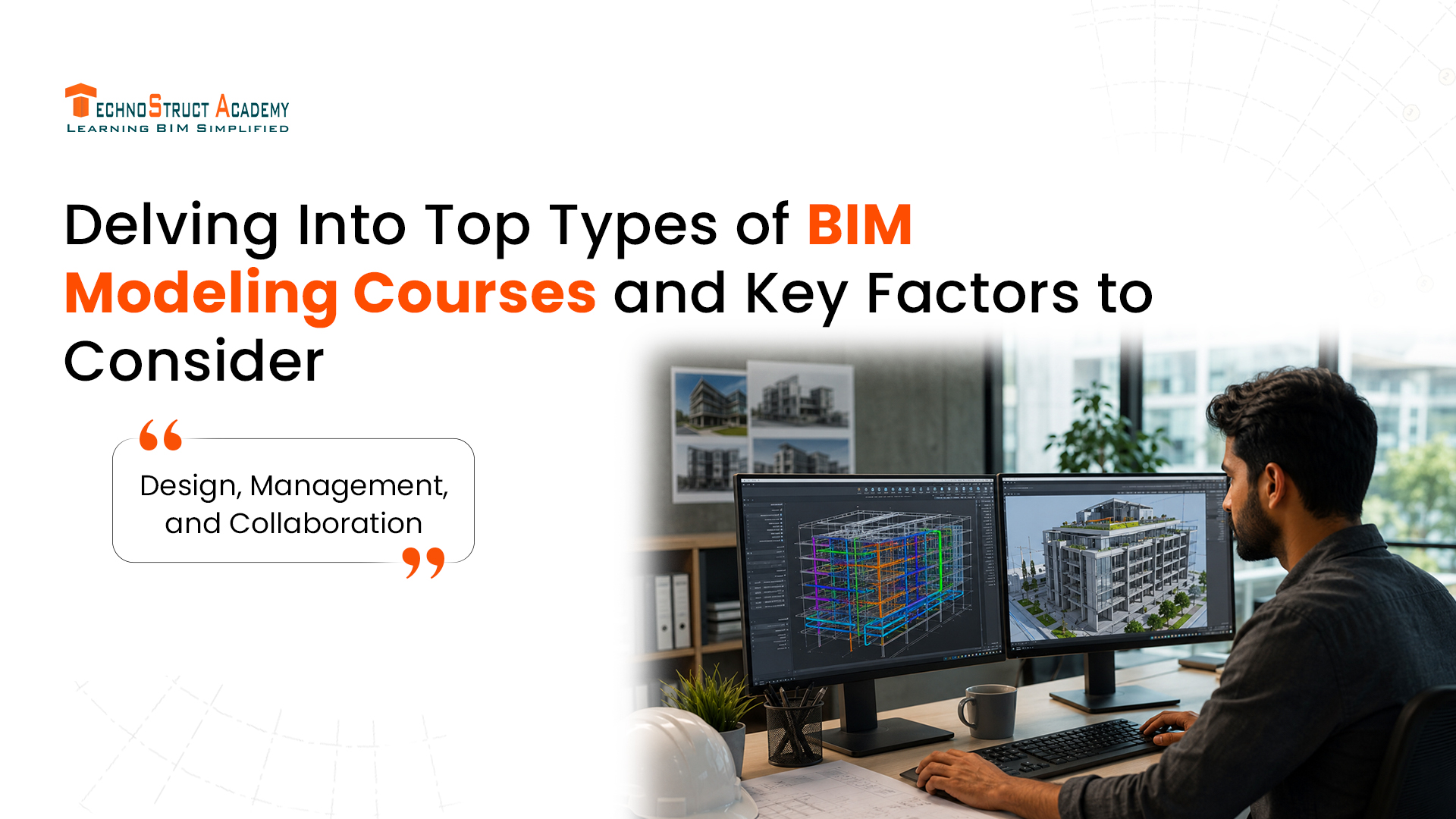
BIM (Building Information Modeling) is transforming the way construction projects are designed, coordinated, managed, and delivered. As the AEC industry increasingly adopts digital workflows, the demand for professionals with practical BIM knowledge continues to grow.
For engineers, architects, and students looking to build a career in this field, choosing the right BIM modeling course can be an important first step.
However, not every BIM course offers the same learning experience. Some focus on software skills, while others provide broader knowledge of BIM workflows, standards, coordination, and project management.
In this guide, we will explore the different types of BIM modeling courses and the key factors you should consider before choosing one.
Types of BIM Modeling Courses
Depending on your career goals, experience level, schedule, and learning preferences, you can choose from several types of BIM courses.
Online BIM Courses
Online BIM courses offer flexibility for students and working professionals who want to learn without attending regular classroom sessions.
Learners can study from almost anywhere and may have access to self-paced modules, live classes, recorded sessions, assignments, and online mentor support.
Online learning can be a suitable option for professionals who need to balance BIM training with work or academic commitments.
However, before choosing an online BIM course, consider:
- Whether the course includes live or recorded sessions
- Availability of mentor support
- Practical assignments and projects
- Your ability to stay consistent with self-directed learning
If flexibility is your priority, an online BIM modeling course may be the right choice.
Offline BIM Courses
Offline or classroom-based BIM courses provide a structured learning environment with direct interaction between students, mentors, and peers.
This format can be beneficial for learners who prefer face-to-face guidance and regular classroom sessions. It may also provide better networking opportunities with fellow learners and industry professionals.
Before choosing an offline BIM course, consider your commuting time, work schedule, and availability.
Degree Programs in BIM
Some institutions offer long-term degree programs that provide a deeper understanding of BIM principles, technologies, and construction workflows.
These programs may include undergraduate, postgraduate, or specialized academic courses related to Building Information Modeling.
A degree program can be suitable for learners looking for extensive academic knowledge. However, it generally requires a greater investment of time and money than shorter certification courses.
Before enrolling, evaluate:
- Course duration
- Total fees
- Curriculum depth
- Career outcomes
- Your long-term professional goals
BIM Certification Courses
BIM certification courses are generally designed for students and professionals who want to develop job-relevant skills within a shorter period.
These courses may focus on specific BIM processes, tools, disciplines, or workflows. They can be particularly useful for professionals looking to upgrade their skills or transition into BIM-related roles.
Compared with long-term degree programs, certification courses can offer a more focused and practical learning experience.
When evaluating a BIM certification course, check whether it includes practical projects, software training, mentor support, and industry-relevant workflows.
Vendor-Specific BIM Certifications
Vendor-specific certifications focus on particular BIM software or technology platforms.
For example, learners may choose training related to tools such as Autodesk Revit, Navisworks, Tekla Structures, or ArchiCAD.
These programs can help professionals develop specialized software skills. However, software expertise alone may not provide a complete understanding of BIM workflows, coordination processes, standards, and project delivery.
Therefore, learners should consider whether they need software-specific training or a broader BIM education.
Master’s in BIM
A master’s program in BIM can be suitable for professionals seeking advanced knowledge, research exposure, or leadership opportunities in the AEC industry.
These programs may cover advanced topics related to digital construction, BIM management, project delivery, research, and emerging technologies.
However, a master’s degree usually requires a significant financial and time commitment.
Before choosing this path, consider whether your career goals require advanced academic qualifications or whether practical BIM training would better support your objectives.
Combined BIM Courses
Some programs combine BIM training with complementary subjects such as project management, construction management, digital construction, or other AEC technologies.
These courses can help learners develop a broader skill set and understand how BIM connects with different aspects of project delivery.
However, combined programs may require additional time and effort. Beginners should ensure that the course structure matches their current knowledge and learning capacity.
Industry-Recognized BIM Courses
Industry-recognized BIM courses are designed around practical skills and workflows relevant to the AEC sector.
These programs may focus on developing competencies that employers look for in BIM professionals, including software proficiency, coordination, collaboration, documentation, and project-based learning.
Before enrolling, review the curriculum, mentor experience, practical exposure, and the type of certification offered.
How to Choose the Right BIM Modeling Course
Choosing the best BIM modeling course depends on more than just the course name or certification. You should evaluate the program based on your career goals and the skills required in your target role.
Define Your Career Goal
Before enrolling in a BIM course, identify the type of role you want to pursue.
Do you want to become a:
- BIM Modeler
- BIM Coordinator
- BIM Engineer
- BIM Specialist
- BIM Manager
Each role requires a different combination of technical and practical skills.
Beginners may benefit from foundational BIM training, while experienced professionals may require advanced courses in coordination, management, standards, or specialized software.
Check the Flexibility of the Course
Students and working professionals often have different schedules and commitments.
Before enrolling, find out whether the BIM training program offers:
- Online classes
- Offline classes
- Weekend batches
- Self-paced learning
- Recorded sessions
- Flexible schedules
A flexible course structure can make it easier to continue learning without disrupting your professional or academic routine.
Evaluate the Curriculum
The curriculum is one of the most important factors when choosing a BIM course.
A good BIM modeling course should go beyond basic software commands and help learners understand practical workflows.
Look for topics such as:
- BIM fundamentals
- Modeling workflows
- Multi-disciplinary coordination
- Clash detection
- BIM standards
- ISO 19650 concepts
- Level of Development (LOD)
- Common Data Environments
- Real-world project workflows
An updated curriculum can help learners develop skills that are more relevant to modern construction projects.
Check the BIM Software Covered
Software training is an important part of BIM education.
Depending on your specialization, the course may include tools such as:
- Autodesk Revit
- Navisworks
- Tekla Structures
- ArchiCAD
However, learning multiple tools is not enough on its own. The course should also teach you how these tools are used within real BIM workflows.
Look for practical assignments, live projects, and project-based learning opportunities.
Look for Practical and Project-Based Learning
BIM is a practical field. Therefore, theoretical knowledge should be supported by hands-on experience.
A valuable BIM course should provide opportunities to work on:
- Practical assignments
- Industry-based case studies
- Sample projects
- Live projects
- Coordination exercises
Project-based learning can help you understand how BIM processes are applied in real construction environments.
Check Internship Opportunities
Internships can provide valuable exposure to professional workflows and industry expectations.
If you are a student or fresher, consider whether the BIM training institute offers internship opportunities or project experience.
Practical exposure can help you build confidence and strengthen your portfolio before applying for BIM-related roles.
Evaluate the Mentors
The quality of mentors can significantly influence your learning experience.
Before choosing a course, review the credentials and professional experience of the instructors.
Ideally, mentors should have practical experience in BIM projects and be able to teach real-world workflows, best practices, and problem-solving approaches.
You can review mentor profiles on the institute’s website or professional platforms such as LinkedIn.
Check Placement Support
For learners looking to start or transition their careers, placement assistance can be an important consideration.
A BIM course with placement support may offer services such as:
- Resume-building guidance
- Portfolio development
- Mock interviews
- Career counseling
- Interview preparation
- Job assistance
Placement support should not be the only factor in your decision, but it can help bridge the gap between learning BIM skills and entering the job market.
Compare BIM Course Fees
BIM course fees can vary significantly depending on the duration, curriculum, software covered, practical training, mentor experience, and additional support provided.
Instead of choosing a course based only on price, compare the overall value.
Consider:
- Course duration
- Curriculum
- Software training
- Practical projects
- Certification
- Mentor support
- Internship opportunities
- Placement assistance
Also check whether the institute offers flexible payment options or EMI facilities.
Which BIM Modeling Course Is Best for You?
There is no single BIM course that is ideal for everyone.
The right choice depends on your current experience and career objectives.
For beginners: A foundational BIM course covering BIM concepts and essential software can be a good starting point.
For working professionals: Flexible or advanced BIM certification courses may help you upgrade your skills without leaving your current job.
For learners targeting specialized roles: Choose programs focused on specific disciplines, software, BIM coordination, or management.
For long-term academic advancement: Consider advanced degree or master’s programs in BIM and digital construction.
The most important factor is to select a course that provides skills relevant to the role you want to pursue.
Final Thoughts
The construction industry is increasingly adopting digital technologies and collaborative workflows, making BIM skills increasingly valuable for AEC professionals.
However, choosing the right BIM modeling course requires careful evaluation. Instead of focusing only on certification or course duration, consider your career goals, curriculum, practical exposure, software training, mentor experience, flexibility, and career support.
A well-chosen BIM course can help you develop practical skills, build confidence, and prepare for opportunities in the evolving digital construction industry.
FAQs
1. Who is eligible for a BIM course?
Most BIM courses are suitable for students and professionals from architecture, civil engineering, mechanical engineering, electrical engineering, and MEP backgrounds. Eligibility may vary depending on the course level and institute.
2. Which BIM course is best for beginners?
Beginners should start with a foundational BIM course that covers basic BIM concepts, modeling workflows, and relevant software such as Autodesk Revit. Practical assignments and project-based learning can also be valuable.
3. Is BIM a good career?
BIM offers career opportunities across architecture, engineering, construction, and infrastructure projects. Career growth depends on your technical skills, practical experience, specialization, and ability to work with modern BIM workflows.
4. What software should I learn for BIM?
The software you should learn depends on your specialization and career goals. Popular BIM tools include Autodesk Revit, Navisworks, Tekla Structures, and ArchiCAD.
5. How do I choose the right BIM modeling course?
Choose a BIM course based on your career goals, experience level, curriculum, software training, practical projects, mentor experience, flexibility, certification, fees, and career support.

Blog Categories